
The Water on Our Plate: Are we water-footprint-conscious?
Every meal has a water footprint. Understanding it can help us make more responsible choices for our planet.


We often associate water conservation with turning off taps, fixing leaking pipes and avoiding unnecessary water use in our homes and gardens. But have we ever considered how much water goes into producing the food on our plates?
Every food item carries an invisible water footprint. From growing crops and raising livestock to processing and transporting food, water is consumed at every stage of the journey.
Consider an interesting comparison between chicken and chickpeas.
According to global average estimates of water footprints, producing one kilogram of chicken requires approximately 4,325 litres of water, while one kilogram of dry chickpeas requires approximately 4,177 litres. In other words, every gram of chicken carries a water footprint of approximately 4.325 litres, compared with 4.177 litres for every gram of dry chickpeas.
These figures include three types of water:
- green water (rainwater used by plants),
- blue water (freshwater from rivers, lakes and groundwater) and
- grey water (an estimate of water required to dilute pollution).
When we eat chicken, we are not consuming only the water that the bird drinks. Consider the entire production chain:
- Water is needed to grow maize, soybean and other grains used as poultry feed.
- Chickens require drinking water.
- Water is used for cleaning poultry sheds and maintaining hygienic conditions.
- Processing and preparation require additional water.
When we throw away half a plate of chicken or a bowl of cooked chickpeas, we are not simply throwing away food.
We are also wasting the water that went into producing that food.
Think about the journey:
- The farmer prepares the land.
- Seeds are planted and crops are grown.
- Water is consumed during cultivation.
- Harvesting, transportation and processing take place.
- Food reaches our kitchen.
- We prepare it and, sometimes, throw it away.
Every wasted portion represents wasted agricultural resources, energy, labour and water.
However, the comparison becomes more meaningful when we consider nutritional value. Chicken and chickpeas do not provide identical amounts of protein per gram.
Pulses, including chickpeas, generally deliver more protein per unit of water footprint than animal-derived foods.
This makes legumes an important option when considering sustainable diets.
The water footprint of chicken extends far beyond the water a bird drinks. It includes the water required to grow maize, soybean and other grains used as poultry feed, maintain poultry facilities and process the meat.
Chickpeas, on the other hand, are legumes that provide plant-based protein, fibre and essential minerals. They also form a beneficial relationship with nitrogen-fixing bacteria in their roots, helping improve nitrogen availability in agricultural systems and potentially reducing the need for synthetic fertilisers.
But the issue is not simply what we eat. It is also what we waste.
When we throw away leftover chicken, chickpeas or vegetables, we are effectively wasting all the water, energy, labour and agricultural resources that went into producing them. Food wastage is therefore also water wastage.
As gardeners and environmentally conscious individuals, we have an opportunity to lead by example by
- Growing our own vegetables,
- composting kitchen waste,
- harvesting rainwater,
- mulching garden beds and
- choosing seasonal produce are practical steps towards a more sustainable lifestyle.
Water conservation must become more than a household habit. It must become a way of thinking about how we produce, purchase, prepare and consume food.

The next time we sit down for a meal, let us remember that there is an invisible water footprint on every plate.
Because conserving water is not just about turning off a tap. It is also about respecting the resources that bring food to our tables.
Make every meal count.
Hence, all gardeners must undertake these five practical commitments:
- Think before you waste: Buy and cook only what you need. Use leftovers responsibly.
- Diversify your protein: Include chickpeas, lentils, beans and other pulses more frequently in your meals.
- Grow your own food: Start a small kitchen garden, however limited your space may be.
- Conserve water in your garden: Harvest rainwater, mulch plants and adopt efficient watering practices.
- Spread awareness: Share the concept of the water footprint of food with family, friends and your community.
(Help of AI has been taken)

GARDENING IN NOVEMBER
(A Season of Winter Blooms and Fresh Vegetables)
As winter approaches, the cool breeze and soft golden sunshine make November one of the most enjoyable months for gardeners. It is a time to fill our gardens with colorful winter flowers and to sow vegetables for fresh, seasonal meals. Whether you have a large garden, a terrace or just a few pots on your balcony, timely sowing and a little care can make the most of this beautiful season.
Growing Winter Flowers
In the plains of North India, October and November are suitable months for sowing many winter annuals. Choose good-quality seeds and follow the sowing depth and spacing recommended on the packet. Tiny seeds generally need only a light covering; sowing every seed one inch deep may be too deep.
For raising seedlings, use a clean, light, well-draining medium such as cocopeat mixed with a little mature compost and some coarse sand or another aerating material. Keep it evenly moist, not waterlogged, and place the seed tray in a bright, ventilated location suited to the variety.
When seedlings have developed a few true leaves and are sturdy enough to handle, transplant them carefully into pots or prepared beds. A practical starting mix is approximately 40% garden soil, 30% mature compost and 30% coarse sand or other aerating material. Adjust the mix to your soil and containers, and ensure that every pot has drainage holes.
Winter Flowers to Try
Popular seasonal choices include Alyssum, Acroclinium, Brachycome, Candytuft, Calendula, Carnation, Cineraria, Cornflower, Dahlia, Dianthus, Daisy, Gazania, Hollyhock, Helichrysum, Linum, Lupin, Larkspur, Pansy, Petunia, Ranunculus, Salvia, Sweet Pea and Sweet Sultan. Some flowers grow best from seed, while others may be easier to establish from seedlings, bulbs or tubers. Choose varieties suited to your local climate and available sunlight.
Sowing Winter Vegetables
November is also a useful month to start a winter kitchen garden in North India. Many vegetables can be grown in garden beds, raised beds, grow bags and suitable containers.
● Leafy vegetables: Spinach, methi (fenugreek), coriander, mustard greens and lettuce.
● Root vegetables: Radish, carrot, turnip and beetroot. Sow them where they will grow, with loose soil and the spacing recommended for each crop.
● Peas and beans: Garden peas and suitable winter bean varieties can be sown according to local conditions and the seed packet.
● Cole crops: Cabbage, cauliflower, broccoli and knol-khol are commonly grown from healthy seedlings. Transplant varieties suited to the season and local climate.
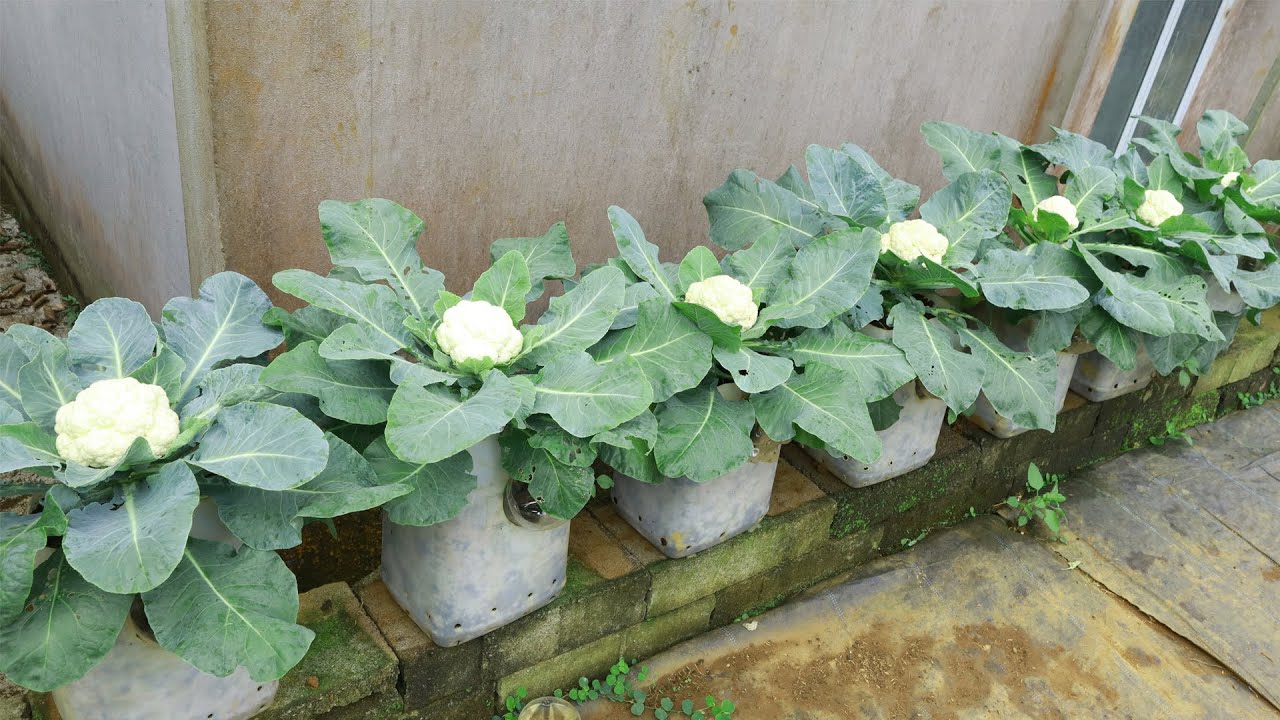
Choose a sunny spot. Most vegetables grow best with around five to six hours of sunlight or more, though requirements vary. Enrich the soil with mature compost, sow or transplant at the recommended spacing, and keep the soil evenly moist without allowing water to collect around the roots.
Caring for Flowers and Vegetables
● Watering: Check the soil before watering. Plants generally use less water in cool weather, but newly sown seeds and seedlings must not dry out. Morning watering is usually preferable.
● Sunlight: Give sun-loving winter flowers and vegetables a bright position, while following the needs of each variety.
● Feeding: Use mature compost when preparing beds and containers. Feed established plants moderately when needed; excessive fertiliser can encourage leafy growth at the expense of flowers or fruit.
● Mulching: A thin layer of clean dry leaves or other organic mulch can help maintain soil moisture and moderate temperature. Keep it away from plant stems.
● Pinching: Pinch the growing tips of suitable flowering plants to encourage branching. Not every variety benefits from pinching, so check its growth habit.
● Cold protection: During unusually cold nights or frost, protect tender plants with a breathable cover and remove it during the day.
● Spacing and hygiene: Avoid overcrowding, remove diseased leaves, and keep containers draining freely to reduce the risk of plant problems.
An Experiment with Kitchen Seeds
Gardeners may be tempted to sow familiar kitchen seeds such as khuskhus (poppy), kalonji (Nigella) and saunf (fennel). However, culinary seeds may not germinate reliably, so seeds intended for sowing are a better choice. To welcome butterflies and other pollinators, grow nectar-rich flowers and suitable host plants for your region.
A Gardener’s Tip
Start with three or four flower varieties and a few vegetables suited to your space. Observe how they respond to sunlight, watering and temperature, and keep notes of sowing dates and harvests. These small observations will help you improve your garden each season.
Gardening is not only about beautiful blooms or fresh vegetables; it is also the pleasure of patience, learning and nurturing life. As November sunshine brightens your balcony or garden, prepare your pots, sow your seeds and look forward to a winter filled with colour, fragrance and fresh produce.
Winter Garden Inspirations
Seasonal flowers bring colour to the winter garden.
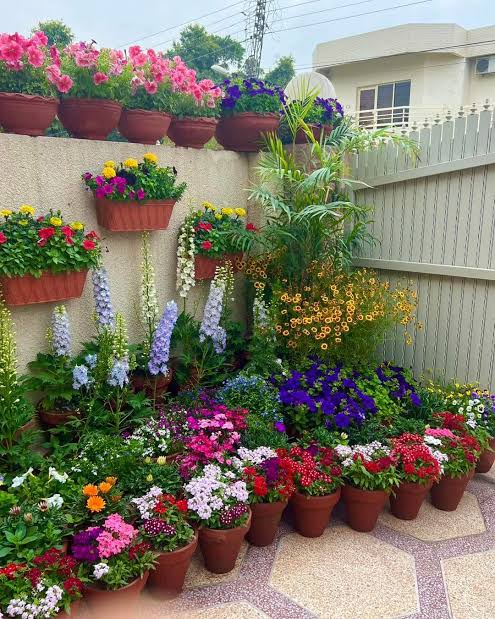
Flowers add beauty and warmth to outdoor spaces.
Happy Gardening!
Rama Tyagi
Trichoderma: A Small Step Towards Healthier Soil and Better Crops
An essential guide for gardeners and farmers to using beneficial fungi for healthier plants and sustainable gardening.
Healthy plants begin with healthy soil. Beyond nutrients, soil needs beneficial microorganisms that support root development, improve biological activity and help plants cope with certain soil-borne diseases. One such useful microorganism is Trichoderma, a group of beneficial fungi widely used in sustainable agriculture and gardening.
Trichoderma can colonise the root zone, compete with certain harmful fungi and support plant growth. When used correctly, it can become a valuable part of an integrated plant-health management programme.
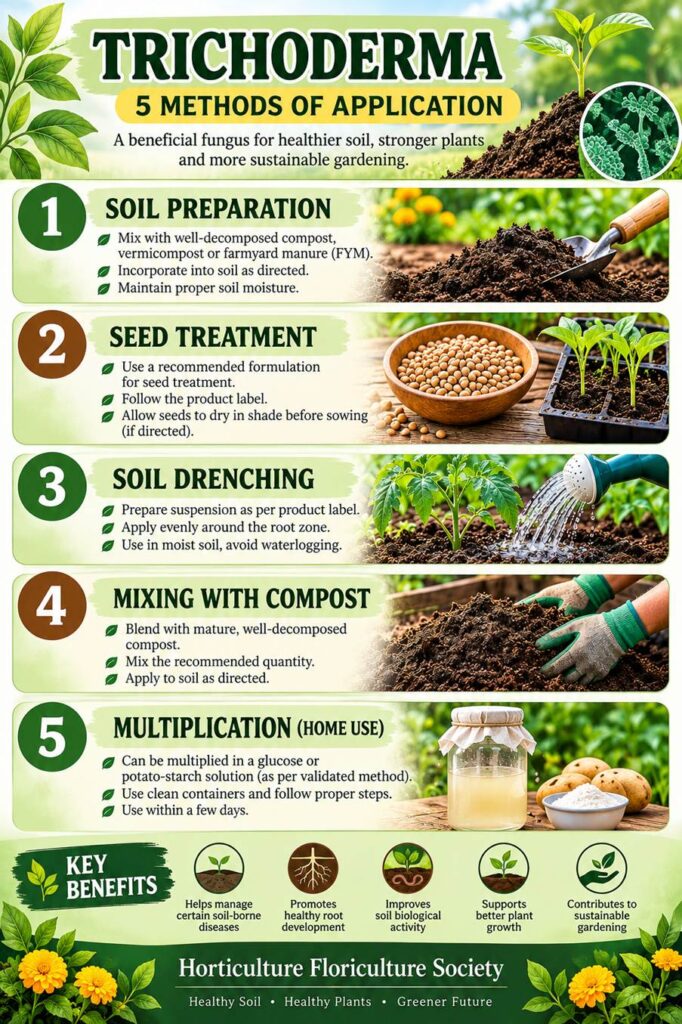
Five methods of applying Trichoderma
1. Soil preparation
Trichoderma can be mixed with well-decomposed compost, vermicompost or farmyard manure (FYM) before incorporating it into the soil.
* Mix the recommended quantity of a suitable Trichoderma formulation with mature compost.
* Distribute the mixture evenly in the planting bed.
* Maintain adequate soil moisture without waterlogging.
This method helps introduce beneficial microorganisms into the root zone. Avoid mixing Trichoderma with chemical fungicides or incompatible products.
2. Seed treatment
Seed treatment can help protect young seedlings against certain seed- and soil-borne fungal diseases.
* Use a Trichoderma product specifically recommended for seed treatment.
* Follow the dose and treatment instructions on the product label.
* Allow treated seeds to dry in the shade, if directed, before sowing.
Do not treat seeds with this method if they have already received a chemical treatment that may be incompatible with the beneficial fungus.
3. Soil drenching
Soil drenching delivers a suspension of the product directly to the soil around plant roots.
* Prepare the suspension according to the product label.
* Apply it evenly around the root zone.
* Use it in moist soil, avoiding waterlogging and excessive runoff.
This method may be useful for garden beds, vegetable plants and container-grown plants when the product is approved for the intended use.
4. Mixing with compost
Compost is a convenient carrier for applying Trichoderma to garden soil.
* Use mature, well-decomposed compost.
* Mix in the recommended quantity of the formulation.
* Apply the mixture to the soil as directed.
Follow the manufacturer’s instructions regarding moisture, storage and the interval between mixing and application. Do not assume that every formulation needs to be activated or stored before use.
5. Multiplication: why caution is important
Some gardening guides describe multiplying Trichoderma in potato-starch or glucose solutions. However, home multiplication can introduce unwanted microorganisms and may not produce a reliable, viable culture. A solution that looks healthy does not necessarily contain effective Trichoderma.
For home gardens and school nutrition gardens, the safer option is to use a quality-controlled agricultural formulation from a reliable source. If multiplication is undertaken for research or demonstration, it should follow an appropriate, validated protocol with contamination control.
Important precautions
* Trichoderma products differ in species, strain, concentration and intended application.
* Always follow the dose printed on the product label; the quantities used in an infographic should not be treated as universal recommendations.
* Avoid direct mixing with fungicides or other incompatible chemicals.
* Store the product under the specified conditions and check its expiry date.
* Remember that Trichoderma complements good gardening practices; it does not replace proper drainage, healthy soil, crop rotation and sanitation.
The way forward
Beneficial microorganisms remind us that soil is a living ecosystem, not merely a medium in which plants grow. By combining composting, responsible microbial applications, water conservation and good horticultural practices, gardeners and farmers can work towards healthier soils and more resilient crops.
Healthy soil, healthy roots, healthy crops — the foundation of sustainable gardening.
Happy Gardening
Rama Tyagi
tyagirama1@gmail. Com
A New Winter Garden in Just 10 Pots
Fresh vegetables, sunshine and the joy of growing your own food
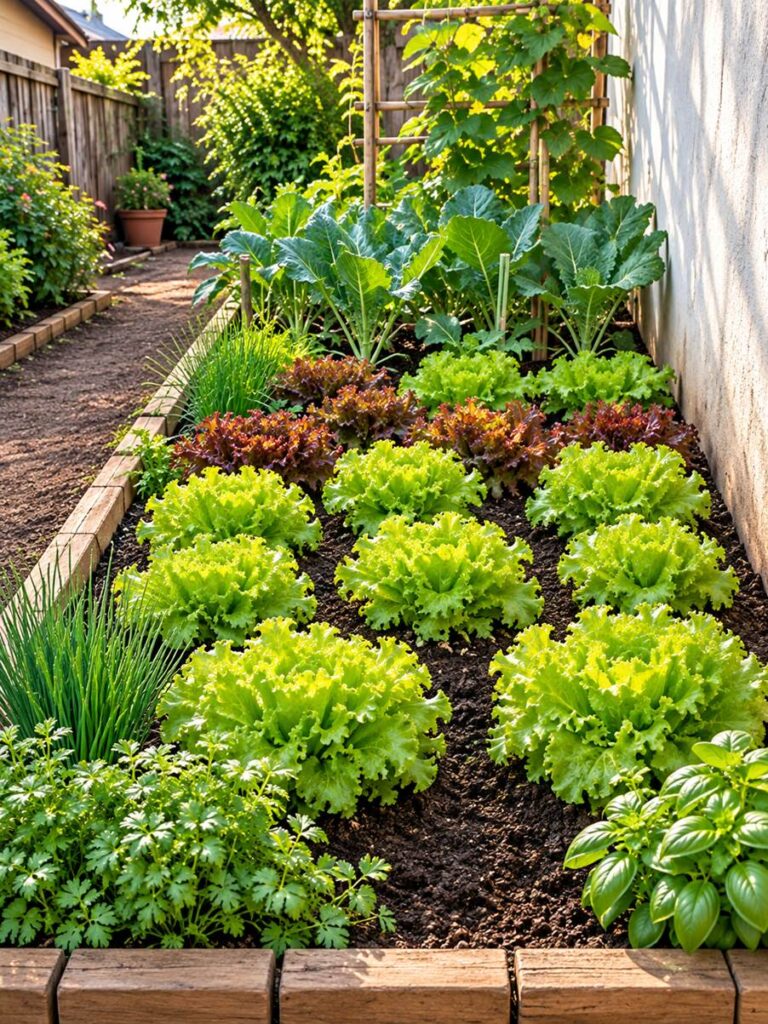
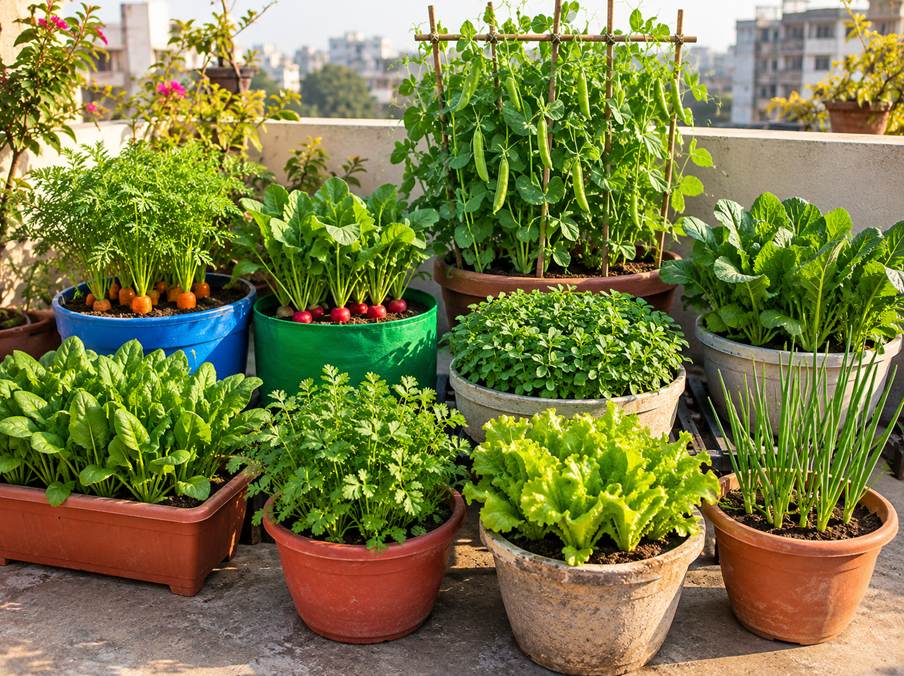
[Add a suitable picture of a sunny balcony or terrace with ten pots growing winter vegetables, including spinach, methi, coriander, radishes, carrots, peas and lettuce.]
You do not need a large garden to grow vegetables. A sunny balcony, terrace or courtyard can become a productive winter garden with ten pots. November is an excellent time in North India to grow winter crops, and even beginners can enjoy fresh harvests at home.
Choose Pots and Prepare the Growing Medium
Select ten containers with drainage holes:
- Spinach: Use a medium pot for repeated leaf harvests.
- Fenugreek (methi): Choose a shallow or medium container.
- Coriander: Use a medium pot and sow in batches.
- Radish: Select a deep container with loose soil.
- Carrot: Choose a deep pot with stone-free soil.
- Green peas: Use a large container with climbing support.
- Leafy mustard: Grow tender leaves in a medium or wide pot.
- Spring onion: Use a long container for rows.
- Lettuce: Choose a medium pot in a sunny, cool location.
- Spinach or methi: Reserve this pot for staggered sowing.
Use well-drained soil mixed with mature compost and cocopeat. Place the pots where they receive several hours of direct winter sunlight.
Sow and Thin the Crops
Sow spinach, methi, coriander, mustard, spring onion, lettuce, radish, carrot and peas according to the seed packets. Sow coriander, spinach and methi in batches to extend the harvest.
Cover seeds lightly and water gently, keeping the soil moist but not waterlogged. As seedlings emerge, thin crowded plants and give carrots and radishes enough room for their roots. Remove weeds and check leaves for pests.
Support and Maintain Peas
Guide pea plants onto their support. Water according to soil moisture, weather and pot size, allowing excess water to drain. Avoid excessive fertiliser; use mature compost or suitable amendments only when needed.
Harvest from Weeks 5–8
Harvest outer leaves of spinach, methi, mustard and lettuce once plants are established. Pick spring onions gradually, and harvest radishes when ready. Allow carrots more time to develop, and pick tender pea pods at the desired size.
After harvesting, sow another small batch of coriander, spinach or methi to maintain a steady supply of greens.
Ongoing Care
Continue watering, weeding and checking for pests. Harvest leafy vegetables regularly without uprooting them, and pick lettuce as outer leaves or as a whole head.
A ten-pot garden provides fresh vegetables while teaching us about seasons, food production and responsible resource use. Begin with ten pots, learn from each harvest and involve children. Even a small garden can become a rewarding connection with nature.
Happy Gardening
Rama Tyagi
tyagirama1@gmail. Com
मेथी की रोटी के लाभ सभी तक पहुंचायें
आप स्वस्थ हों देश स्वस्थ हो और साथ ही अपना व देश का करोड़ों रुपये बचायें
रोटी बना रहीं हैं, तो आटे में गूंथ लें मेथी के पत्ते, मेथी की रोटियां देंगी आपकी सेहत को ये 7 लाभ
अगर आप अपनी सर्दियों की डाइट में हेल्थ एड करना चाहती हैं, तो रोटियों के आटे में गूंथ ले थोड़ी सी मेथी।
मेथी की रोटी मेथी के सेवन का सबसे आसान तरीका है।
सब्जियां वहीं हैं। पर उन्हें खिलाने का आपका अंदाज उन्हें पोषक तत्वों के साथ-साथ स्वाद से भर देता है। इन दिनों बाजार में मेथी की आमद खूब हो रही है। ऐसी ताजी और हरी मेथी न सिर्फ देखने में अच्छी लगती है, बल्कि इसकी हरी पत्तियां आपकी सेहत के लिए भी बहुत फायदेमंद हैं। विभिन्न शोध बताते हैं कि सर्दियों में मेथी का सेवन आपको साल भर की सेहत देता है।
मेथी के स्वाद में थोड़ी कड़वाहट होती है। इसलिए बच्चों को इसे खिलाना थोड़ा मुश्किल होता है। पर मेथी को अगर आप अन्य सब्जियों के साथ मिलाकर बनाएं तो इसकी कड़वाहट का पता ही नहीं चलेगा। मेथी को सिर्फ सब्जी के रूप में ही नहीं, बल्कि रोटी, पूड़ी और परांठे के रूप में भी सेवन किया जा सकता है।
जानिए क्यों सेहत के लिए जरूरी है सर्दियों में हरी मेथी का सेवन
1 पोषक तत्वों से भरपूर है मेथी
संयुक्त राज्य अमेरिका के कृषि विभाग (United States Department of Agriculture) के अनुसार मेथी प्रोटीन, फैट, कार्बोहाइड्रेट, डाइट्री फाइबर के साथ ही सोडियम, कैल्शियम, आयरन, मैग्नीशियम, फास्फोरस, पोटेशियम, जिंक, विटामिन- ए,बी,सी, थायमिन, राइबोफ्लेविन, नियासिन, फोलेट- DFE जैसे पोषक तत्वों से भरपूर होती है। जो हमारे शरीर को स्वस्थ बनाए रखने में बहुत मददगार साबित होती हैं।
2 बालों को बनाती है ज्यादा घना
रिसर्च के अनुसार हरी मेथी का सेवन करने से शरीर में कोलेस्ट्रॉल का स्तर कम होता है। जिससे हृदय संबंधी बीमारियां होने का जोखिम कम हो जाता है। इसके साथ ही मेथी के सेवन से बेचैनी की समस्या भी दूर होती है। इसके अलावा अगर हरी मेथी को पीसकर बालों में लगाया जाए तो इससे बालों को मजबूत, घना, चमकदार और काला बनाने में मदद मिलती है।
3 हार्ट को रखे हेल्दी
मेथी में गैलेक्टोमेन्नन नाम का एक तत्व मौजूद होता है। जो हमारे हृदय को सेहतमंद बनाने में मदद करता है। साथ ही इसमें पोटेशियम भी पर्याप्त मात्रा में मौजूद होता है जो ब्लड प्रेशर को कंट्रोल करने का काम करता है। ऐसे कई शोध हैं जो इस बात की पुष्टि करते हैं कि मेथी के सेवन से हार्ट अटैक का जोखिम की संभावना कम हो जाती है।
4 कोलेस्ट्रॉल को करती है कंट्रोल
हमारे शरीर में मौजूद खराब कोलेस्ट्रॉल कई मायनों में हमारे स्वास्थ्य के लिए नुकसानदायक होता है। मेथी की पत्तियों में ऐसे शक्तिशाली गुण मौजूद होते हैं जो कोलेस्ट्रॉल को नियंत्रित करने में मददगार साबित हो सकते हैं। आप अपने कोलेस्ट्रॉल को मैनेज करने के लिए हरी मेथी को कई तरह से अपनी डाइट में शामिल कर सकती हैं।
5 शरीर के दर्द में देती है राहत
हरी मेथी की तासीर गर्म होती है। इसलिए सर्दियों में मेथी का सेवन बहुत फायदेमंद माना जाता है। इसमें कैल्शियम, आयरन और फास्फोरस जैसे गुण मौजूद होते हैं। जो हमारे शरीर को दर्द से राहत दिलाने के लिए काफी फायदेमंद होते हैं। इसके अलावा गठिया, बदन दर्द और जोड़ों के दर्द की समस्या से राहत पाने के लिए भी हरी मेथी का सेवन बहुत लाभकारी होता है।
6 डायबिटीज में भी है फायदेमंद
हरी मेथी में मौजूद एमिनो एसिड और घुलनशील फाइबर शरीर में ब्लड शुगर लेवल को कंट्रोल करने के लिए बहुत फायदेमंद है। इसलिए डायबिटीज के रोगियों के लिए हरी मेथी का सेवन करना बहुत फायदेमंद है।
7 पाचन तंत्र को बनाए मजबूत
हरी मेथी में फाइबर और एंटीऑक्सीडेंट होते हैं। जो हमारे शरीर से टॉक्सिन को बहार निकालने का काम करते हैं। साथ ही पाचन तंत्र को भी दुरुस्त करते हैं। हरी मेथी के सेवन से आपको कब्ज, अपच या पेट दर्द की समस्या से राहत मिलती है। साथ हरी मेथी कई पेट संबंधी परेशानियों को दूर करने के लिए भी फायदेमंद है।
सदास्वस्थरहें
THE RAREST FLOWERS BLOOMING ON EARTH
Queen of the Night
The Epiphyllum oxypetalum, also called Queen of the Night or Dutchman’s pipe cactus, is a popular species of cactus famous for producing large, sweet-smelling flowers only one night per year, and only for a couple of hours!

Corpse flower
The corpse flower, or titan arum, blooms just once in a few decades. It can reach up to 11.8 ft (3.6 m) in height, though it has no roots, and only one large petal shaped like a cone. It gets its name from the foul odor it emits during bloom, similar to rotting meat, which is reportedly meant to attract flies and carrion beetles.

Ghost orchid
Named after the shape of its petals, the ghost orchid, or dendrophylax lindenii, is one of the rarest flowers of the world because it requires high temperatures and high humidity to grow (typically in Cuba, Florida and the Bahamas), making it almost impossible to cultivate outside its natural habitat. It’s also hard to find without any leaves, and blooms only for three weeks between April and August.


Juliet rose
The Juliet rose is considered one of the rarest flowers in the world because it took 15 years for rose breeder David Austin to cultivate the flower in England and it cost him a whopping US$4.3 million (£3 million) to do so! The rose has beautiful peach and apricot colored petals.
Rothschild’s slipper orchid
Apparently worth thousands of dollars on the black market, the Rothschild’s slipper orchid, or paphiopedilum rothschildianum, is considered one of the rarest flowers in the world. It not only grows at altitudes above 1,640 feet (500 m) and only in the rainforests of Mount Kinabalu, but it also takes 15 years to bloom.

Chocolate cosmos
Native to Mexico but nonexistent in the wild anymore, the cosmos atrosanguineus flower is reddish-brown in color and gives off a rich chocolate aroma when it blooms, hence the name. It blooms in the evening at the end of summer and does not produce any seeds.

Black bat flower
The black bat flower, or tacca chantrieri, is the most unique flower in the world because of its color. It got its name from its bat-like appearance, including long, droopy whisker-like stamens, and is found in Southeast Asia where there is lots of humidity.

(courtesy INternet)

MISSION SNG